
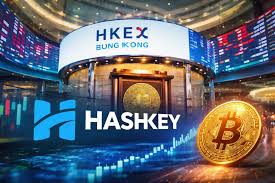
A new chapter in the history of Asian finance began today. On December 17, 2025, HashKey Group officially listed its shares on the Main Board of the Hong Kong Stock Exchange (HKEX). This HashKey IPO represents the first time a licensed cryptocurrency exchange has successfully gone public in the city, marking a massive victory for Hong Kong’s ambition to become a global digital asset hub. Despite the current “Crypto Winter” weighing on token prices, the massive demand for HashKey shares proves that institutional and retail investors still possess a high appetite for regulated, compliant exposure to the blockchain economy.
The Financial Mechanics of the $206 Million Raise
The HashKey IPO successfully raised HK$1.61 billion, which translates to approximately US$206.96 million. The company priced its shares at HK$6.68, hitting the upper end of its marketed range. This pricing strategy reflects the immense confidence the market has in HashKey’s “compliance-first” business model. By issuing 240.6 million shares, the company has secured the capital necessary to upgrade its infrastructure and expand its ecosystem across the Asia-Pacific region. You see a clear message from the market: investors are willing to pay a premium for transparency and regulatory safety.
Explosive Demand: Retail vs. Institutional Interest
The level of interest in the HashKey IPO exceeded even the most optimistic analyst forecasts. The retail component of the offering was oversubscribed by a staggering 394 times. Meanwhile, the international institutional tranche reached 5.5 times oversubscription, attracting cornerstone investors like Cithara Global and UBS Asset Management. This surge in demand proves that the “Retail Rotation” we discussed in previous articles is now moving toward regulated equity. Investors who are tired of the volatility in the altcoin markets are finding a more stable “safe haven” in the public shares of the exchanges that facilitate those trades.
A Bumpy but Historic Market Debut
Trading opened with significant volatility on the HKEX. Shares briefly surged 5% to reach HK$7.10 before facing selling pressure that pushed the price slightly below the IPO level to HK$6.50. You should interpret this “flat” debut as a reflection of the broader market environment, as Bitcoin recently hit an eight-month low. However, HashKey Chairman Xiao Feng hailed the day as a “glorious milestone.” By maintaining a market capitalization of roughly HK$18.5 billion (US$2.4 billion), HashKey has officially become the most valuable listed crypto firm in Hong Kong, overtaking its local rival, OSL Group.
Strategic Use of the IPO Proceeds
HashKey has a clear roadmap for its newly acquired capital. The company will allocate 40% of the net proceeds toward technology and infrastructure upgrades, including the further development of “HashKey Chain.” Another 40% will fund market expansion and strategic ecosystem partnerships. This aggressive growth plan ensures that HashKey remains competitive as other exchanges like Kraken and Gemini prepare for their own public listings. You are witnessing the foundational construction of a fully integrated on-chain financial system where tokenized stocks and digital currencies merge.
The “Compliance-First” Philosophy
In his listing ceremony speech, Xiao Feng emphasized that “taking the compliant route leads to success.” This philosophy sets the HashKey IPO apart from the unregulated exchanges that dominated previous cycles. By operating under the strict supervision of the Securities and Futures Commission (SFC) of Hong Kong, HashKey provides a level of investor protection that is simply unavailable on offshore platforms. This regulatory moat protects the company from the legal “crackdowns” that continue to affect the broader industry, ensuring its long-term viability in an increasingly regulated world.
Hong Kong as a Global Digital Asset Sandbox
The success of the HashKey IPO reinforces Hong Kong’s status as a “testing ground” for mainstream crypto adoption. While mainland China maintains a strict stance on private crypto trading, Hong Kong operates with the economic freedom necessary to innovate. You should watch for more firms to follow HashKey’s lead in 2026. The city is currently rolling out blueprints for stablecoin licensing and spot Solana ETFs, positioning itself as a superior alternative to other financial centers like Dubai or Singapore.
The 2026 Outlook for Public Crypto Firms
As we move toward the new year, the HashKey IPO serves as a vital reference point. Analysts expect this listing to trigger a wave of similar offerings from fintech and blockchain companies across Asia. You must realize that the convergence of traditional finance and on-chain assets is no longer a futuristic theory; it is a current reality happening on the HKEX. By monitoring the performance of HashKey shares, you gain a “real-time” indicator of institutional sentiment toward the entire digital asset sector.
Conclusion: Investing in the Infrastructure of the Future
You now possess a direct way to invest in the growth of the Asian crypto market without holding a single token. The HashKey IPO has successfully bridged the gap between the blockchain and the stock market. While the debut was bumpy, the massive oversubscription and high valuation signal a bright future. As an active investor, you should look for entry points in companies like HashKey that prioritize compliance, infrastructure, and long-term strategic growth. The era of the regulated crypto exchange has officially arrived on the world stage.

Frequently Asked Questions (FAQ’s)