
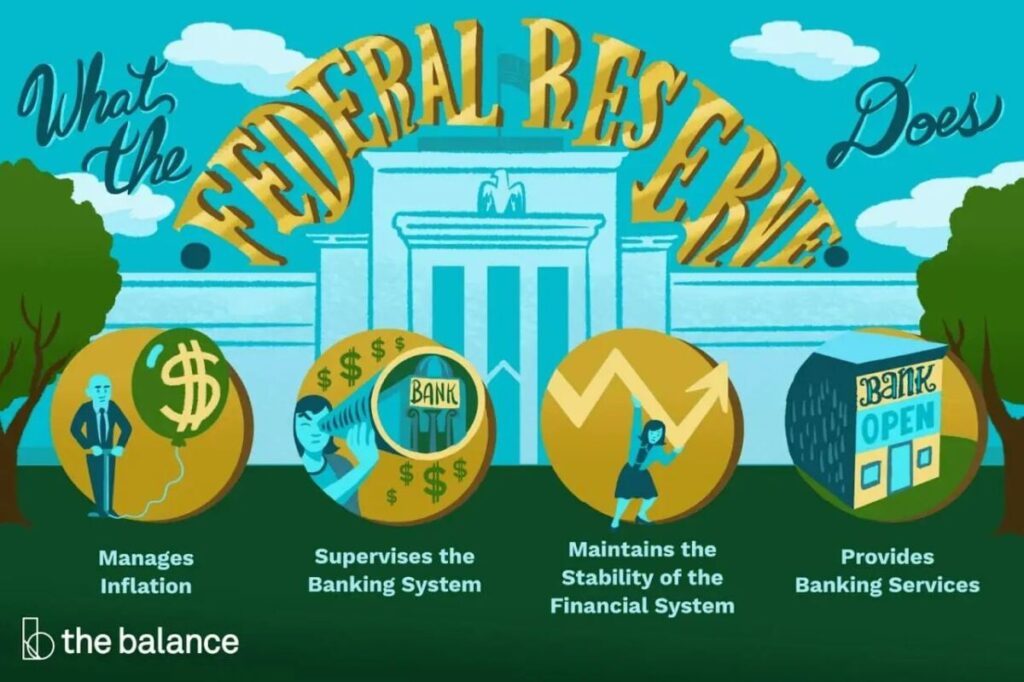
Federal Reserve Decision Today: What It Means for Crypto and Stock Markets highlights how the market has reacted sharply to the latest Federal Open Market Committee (FOMC) announcement amid renewed expectations of interest rate cuts. Traders and investors across both crypto and equities are pricing in changes to monetary policy, seeking clarity on the economic outlook and future liquidity conditions. This heightened anticipation has fueled price swings across major asset classes, creating a more volatile trading environment overall.
Even if the headline decision was widely expected, the ripple effects continue beyond the initial announcement. Both Bitcoin and Ethereum have shown sensitivity to the wording and guidance from the Federal Reserve, while stock markets have digested the implications of monetary policy for earnings growth and capital costs.
Federal Reserve Decision Today: What It Means for Crypto and Stock Markets — Crypto Market Reactions
Federal Reserve Decision Today: What It Means for Crypto and Stock Markets shows that cryptocurrencies like Bitcoin and Ethereum often react quickly to changes in rate expectations because they are perceived as “risk-on” assets. When the Federal Reserve signals a dovish stance or interest rate cut, liquidity in the financial system tends to rise, making risk assets more attractive. This dynamic has previously led to rallies in crypto prices as investors seek higher returns than traditional products can offer at lower yields.
However, the response is not always straightforward. Even after recent rate cuts, crypto markets have sometimes struggled when investor appetite was dampened by uncertain guidance or mixed economic data. Market reactions can be volatile and short-lived depending on global sentiment and liquidity flows.
Federal Reserve Decision Today: What It Means for Crypto and Stock Markets — Stock Index Reaction
Federal Reserve Decision Today: What It Means for Crypto and Stock Markets also extends to traditional markets, where major stock indices such as the S&P 500 and Nasdaq have shown mixed performance following the FOMC decision. Investors watch how interest rate policy influences corporate borrowing costs, earnings forecasts, and sector rotations, especially in growth-oriented areas like technology and consumer discretionary.
Equity markets tend to react positively when rate cuts are seen as supportive of economic growth, but the “sell-the-news” phenomenon can arise if investors feel that easing moves were already priced in. In those scenarios, stocks can trade sideways or even correct as traders shift focus to earnings, inflation data, or geopolitical developments.
Federal Reserve Decision Today: What It Means for Crypto and Stock Markets — Rate Expectations and Liquidity
Federal Reserve Decision Today: What It Means for Crypto and Stock Markets underscores the Fed’s role in shaping market liquidity. Rate cuts generally lower borrowing costs and inject liquidity, encouraging risk-taking. This can benefit both crypto and stocks, as investors chase higher returns in a low-yield environment.
At the same time, rate cut expectations can influence currency strength — especially the U.S. dollar. A weaker dollar often supports global risk assets, while a stronger dollar, driven by tightening policy or hawkish guidance, can suppress demand for crypto and equities alike. Investors monitor these dynamics closely as they allocate capital.
Federal Reserve Decision Today: What It Means for Crypto and Stock Markets — Bitcoin Sensitivity to Monetary Policy
Federal Reserve Decision Today: What It Means for Crypto and Stock Markets confirms that Bitcoin’s price sensitivity to Fed decisions stems from its role as both a speculative and macro hedge asset. With Bitcoin trading above key support levels due to anticipation of easing monetary conditions, any signal of future rate cuts can trigger renewed risk appetite and position adjustments among traders.
Yet Bitcoin remains volatile. If the Fed communicates caution or indicates limited further easing, Bitcoin’s gains may be muted. Investors often interpret policy language as a signal of economic confidence or risk tolerance, making the press conference and forward guidance as significant as the rate decision itself.
Federal Reserve Decision Today: What It Means for Crypto and Stock Markets — Ethereum and Altcoins Trend Patterns
Federal Reserve Decision Today: What It Means for Crypto and Stock Markets highlights how Ethereum and major altcoins often follow broader crypto market trends tied to monetary policy. Ethereum, which serves both as a utility and smart contracts platform, can experience amplified price swings amid changes in liquidity and investor risk sentiment.
While Bitcoin leads on macro-driven moves, Ethereum’s performance is increasingly influenced by network activity, DeFi trends, and speculative demand. Together, these forces shape how altcoins perform relative to the Fed’s decision, causing periods of rotation between assets based on risk appetite and yield expectations.
Federal Reserve Decision Today: What It Means for Crypto and Stock Markets — Institutional Positioning
Federal Reserve Decision Today: What It Means for Crypto and Stock Markets shows that institutional positioning is another critical factor driving market behavior. Institutional investors often reduce leverage or adjust portfolio risk when faced with macro uncertainty. This can create temporary price pressures in both crypto and stock markets when policy expectations shift rapidly.
Conversely, clear guidance from the Fed — especially if dovish — can encourage institutional flows back into risk assets. Regulated products like Bitcoin ETFs and equity index funds are particularly sensitive to changes in expected interest rates, impacting market depth and liquidity.
Federal Reserve Decision Today: What It Means for Crypto and Stock Markets — Risk Appetite and Market Psychology
Federal Reserve Decision Today: What It Means for Crypto and Stock Markets illustrates how market psychology plays a central role after a Fed announcement. Even when fundamentals remain solid, fear or optimism can drive price movements that don’t align directly with economic indicators. Rapid swings in sentiment often occur around the FOMC press conference and subsequent market reactions.
This psychological component often amplifies short-term volatility. Traders may react to headlines, commentary, or even technical levels rather than fundamental drivers, leading to unpredictable price behavior in both crypto and equities.
Final Thoughts
Federal Reserve Decision Today: What It Means for Crypto and Stock Markets highlights the intricate relationship between monetary policy and asset performance. Fed decisions about interest rates, forward guidance, and economic outlook play a central role in shaping investor expectations across global markets. Understanding these links helps traders and investors anticipate liquidity flows, risk appetite, and strategic positioning.
While the immediate market reaction can be volatile, long-term trends depend on broader economic conditions, inflation trajectories, and geopolitical developments. Savvy investors balance macro awareness with disciplined risk management to navigate this evolving landscape effectively.
Frequently Asked Questions (FAQ’s)