
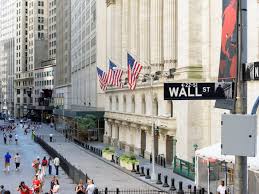
Wall Street Trends 2025 reflect a market navigating between optimism and caution as investors react to shifting economic signals. Equity markets are no longer driven by a single narrative but by a combination of interest rates, earnings growth, inflation trends, and global developments. This complexity makes market direction more nuanced than in previous years.
Investors are increasingly selective, focusing on quality stocks with strong balance sheets and predictable cash flows. Rather than chasing momentum blindly, market participants are evaluating long-term fundamentals alongside short-term catalysts.
Interest Rates and Federal Reserve Policy Impact
Interest rates remain one of the strongest drivers within Wall Street Trends 2025. Central bank policy decisions directly influence borrowing costs, corporate profits, and consumer spending. Even subtle shifts in rate expectations can trigger significant market volatility.
As inflation moderates, investors closely monitor guidance from policymakers. Rate stability or future cuts tend to support equities, while prolonged high rates pressure growth stocks and speculative sectors.
Corporate Earnings and Profitability Focus
Corporate earnings play a central role in shaping Wall Street Trends 2025. Companies delivering consistent revenue growth and strong margins continue to attract institutional capital. Earnings beats reinforce confidence, while weak guidance often leads to sharp sell-offs.
Investors now prioritize profitability over pure growth. Firms with efficient cost structures and resilient demand stand out, particularly during periods of economic uncertainty.
Technology and AI Driving Market Leadership
Technology stocks dominate Wall Street Trends 2025, with artificial intelligence emerging as a long-term growth engine. Companies investing heavily in AI infrastructure, automation, and data analytics are gaining competitive advantages across industries.
AI-driven productivity gains improve earnings potential, making tech leaders attractive to long-term investors. This trend continues to reshape market leadership and index performance.

Sector Rotation and Defensive Positioning
Sector rotation is a defining feature of Wall Street Trends 2025. As economic conditions evolve, capital flows shift between growth, value, cyclical, and defensive sectors. Utilities, healthcare, and consumer staples often gain attention during uncertain periods.
Understanding sector rotation helps investors anticipate market moves. Strategic allocation across sectors reduces risk and improves portfolio resilience.
Inflation Trends and Consumer Spending
Inflation trends strongly influence Wall Street Trends 2025 by shaping consumer behavior and corporate pricing power. Lower inflation supports discretionary spending, benefiting retail, travel, and entertainment sectors.
However, persistent price pressures can squeeze margins and reduce purchasing power. Investors watch inflation data closely to gauge future market direction and policy responses.
Global Events and Geopolitical Influence
Global developments significantly affect Wall Street Trends 2025. Trade policies, geopolitical tensions, and international economic performance impact supply chains and investor sentiment. Markets react quickly to uncertainty arising from global conflicts or policy shifts.
Diversified portfolios help mitigate risks associated with global instability. Investors increasingly assess international exposure when evaluating U.S. equities.
Market Volatility and Investor Sentiment
Volatility remains elevated in Wall Street Trends 2025 as markets digest mixed economic signals. Short-term price swings reflect rapid changes in sentiment driven by data releases and news events.
Despite volatility, long-term investors view pullbacks as opportunities. Maintaining discipline during uncertain periods often leads to better outcomes than reactive trading.
Role of Institutional Investors and Liquidity
Institutional participation shapes Wall Street Trends 2025 by influencing liquidity and price discovery. Large funds allocate capital strategically, amplifying trends once conviction builds.
Liquidity conditions also matter. When liquidity is abundant, risk assets tend to perform well. Tight liquidity, however, increases volatility and reduces speculative appetite.
Retail Investor Behavior and Market Dynamics
Retail investors remain active contributors to Wall Street Trends 2025. Access to trading apps, social platforms, and real-time data empowers individuals to participate alongside institutions.
While retail enthusiasm can boost momentum, informed decision-making is essential. Successful investors balance sentiment with fundamentals and risk management.
How Investors Should Navigate Wall Street Trends 2025
Navigating Wall Street Trends 2025 requires adaptability and patience. Investors should focus on diversified portfolios, strong fundamentals, and realistic expectations. Long-term strategies outperform short-term speculation during volatile markets.
Regular portfolio reviews and disciplined risk controls help investors stay aligned with evolving market conditions while minimizing emotional decisions.
Final Thoughts
Wall Street Trends 2025 highlight a market driven by powerful forces including interest rates, earnings performance, technology innovation, and global developments. While volatility persists, opportunities exist for investors who understand these drivers and maintain disciplined strategies. By focusing on quality assets, diversification, and long-term fundamentals, investors can navigate current market conditions with confidence and resilience.